People's rubber is one of the important plantation commodities that are a source of income for millions of farmers in Indonesia. In addition to playing a role in supporting the household economy, smallholders ' rubber plantations also contribute to the provision of national industrial raw materials and exports. Sustainable management of rubber plantations can increase productivity, maintain environmental quality, and strengthen the welfare of people in rural areas.
Cultivation and maintenance of rubber plants
Knowledge of good cultivation techniques is the basis for the success of the people's rubber business. The material in this section covers the selection of superior seeds, land preparation, planting techniques, fertilization, weed control, to plant maintenance in various phases of growth. The application of proper cultivation practices can increase the productivity and economic life of rubber plants.
Latex tapping and production techniques
Tapping is an important stage that determines the quantity and quality of rubber yield. This Area discusses the correct tapping technique, optimal tapping times, the use of appropriate equipment, as well as efforts to maintain the health of the tree during the production period. Such knowledge helps farmers obtain maximum latex yields without damaging crops.
Processing and improving the quality of Rubber Products
The quality of rubber products is greatly influenced by the post-harvest handling process and initial processing. This subtopic discusses the collection of latex, making bokar( rubber processing materials), the use of recommended freezing materials, as well as the quality standards required by the market. Good processing can increase the selling value and competitiveness of people's rubber products.
Institutional and marketing strengthening
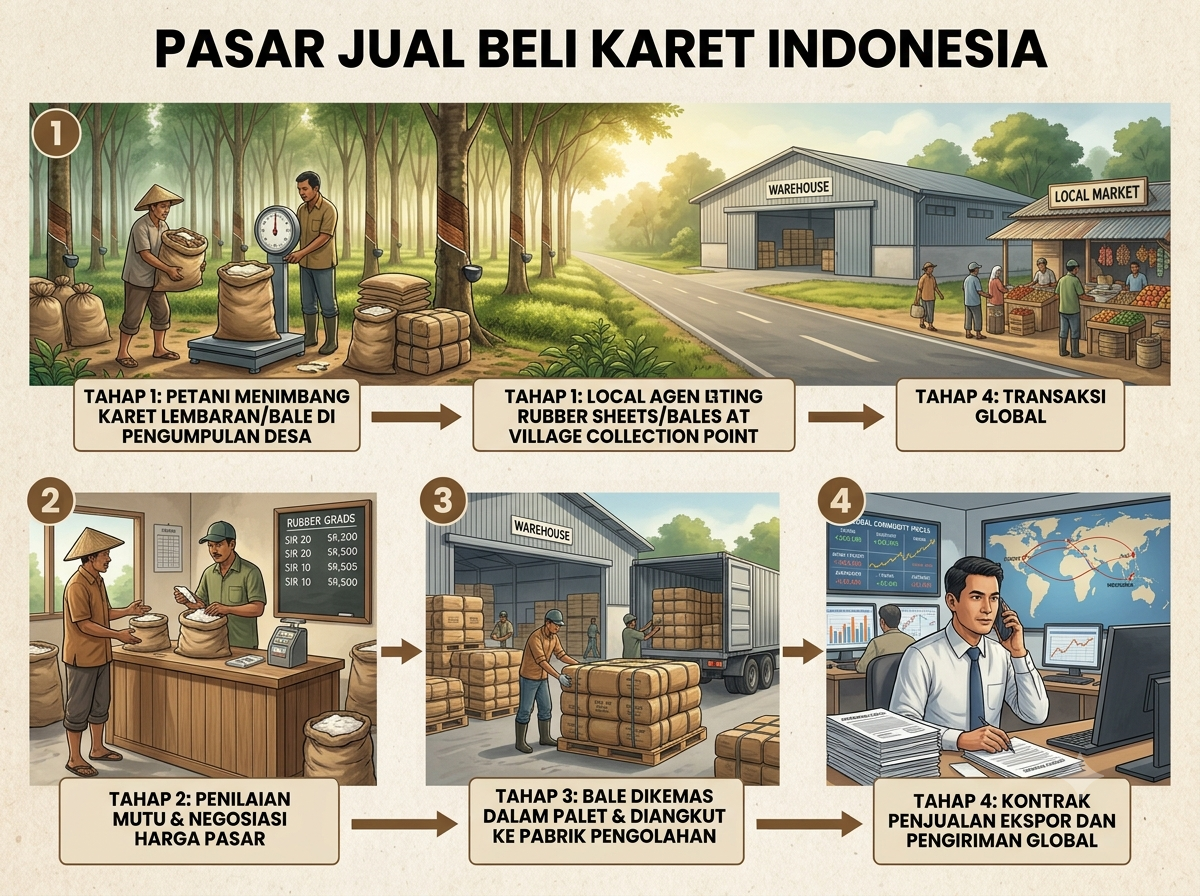
Institutional farmers have a strategic role in improving bargaining position and market access. The discussion in this section includes the formation of farmer groups, cooperatives, business partnerships, marketing systems, to strategies to deal with fluctuations in rubber prices. Through strong institutions, farmers can gain better access to Information, Technology, and business opportunities.
Climate change sustainability and adaptation
Smallholder rubber plantations face a variety of challenges, including climate change, pest and disease attacks, and pressures on Natural Resources. This knowledge Area addresses sustainable plantation practices, soil and water conservation, rubber-based agroforestry, as well as adaptation strategies to maintain long-term productivity. A sustainable approach not only protects the environment, but also ensures the sustainability of farmers ' businesses in the future.